PTP TARGETS NET ZERO BY 2050, SEEKS DEEPER GREEN PORT COOPERATION WITH AUSTRALIA
By Wan Muhammad Aslah Wan Razali
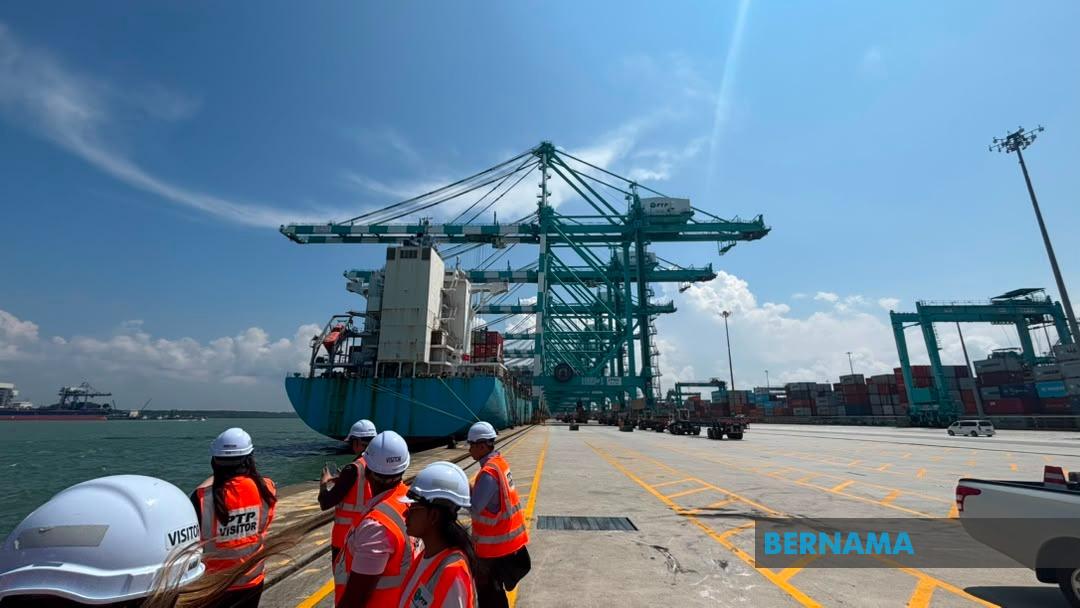
ISKANDAR PUTERI, June 9 (Bernama) -- Port of Tanjung Pelepas Sdn Bhd (PTP), one of the world’s fastest-growing container ports, is targeting net zero emissions by 2050 as it accelerates its decarbonisation efforts through equipment electrification, renewable energy initiatives, and green bunkering development.
PTP chief executive officer Mark Hardiman said the port’s decarbonisation pathway includes a 45 per cent reduction in emissions by 2030, carbon neutrality by 2040, and net zero by 2050.
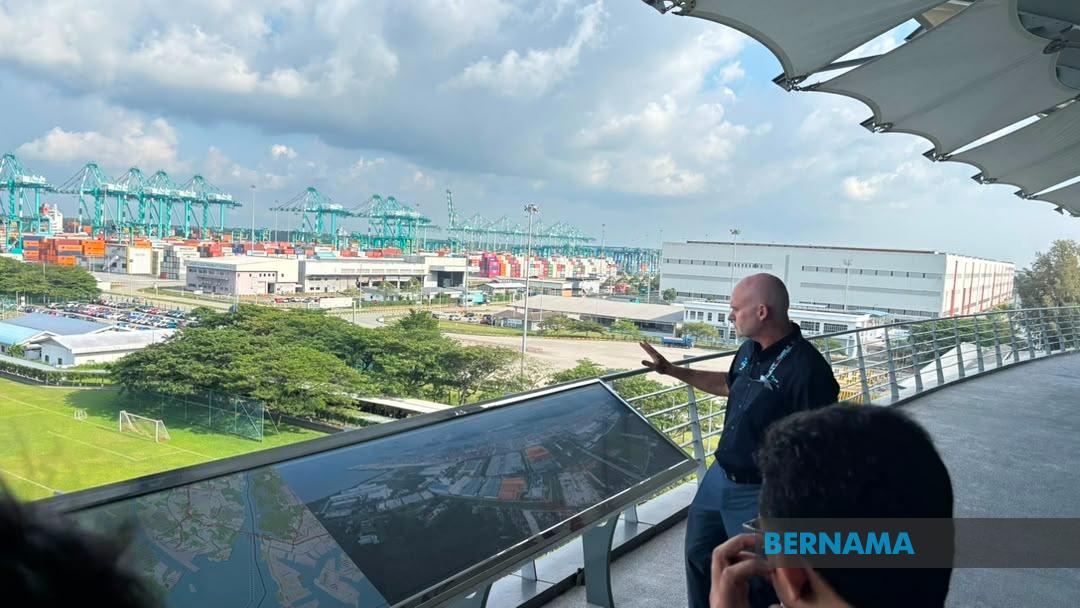
The target is being pursued as PTP continues to record strong growth, handling 14.03 million twenty-foot equivalent units (TEUs) in 2025 and ranking 13th among the world’s top container ports by volume throughput.
Hardiman said PTP’s growth of about 14 to 15 per cent made it stand out among leading global ports, supported largely by the Gemini Cooperation between Maersk and Hapag-Lloyd, which has strengthened the its position as a major hub in Southeast Asia.
Speaking to reporters during a media visit to PTP in Johor organised by the Australian High Commission in Malaysia recently, he said the port had already fully electrified its quay cranes and rubber-tyred gantry cranes, while the transition of its prime movers from diesel to electric was underway.
“We have now started the journey of electrification of the prime movers. The first 52 (electric prime movers) are on their way. All 52 will be in by September,” he said, adding that PTP is also planning to order another batch of 76 electric prime movers next year.
While electric prime movers involve higher capital expenditure, Hardiman said their running cost would be lower over the life of the asset, making the shift commercially relevant amid rising fuel costs.
The total phase-out of diesel-powered rubber-tyred gantry cranes represents PTP’s decarbonisation plan in the short term. In the medium term, the port is implementing the Corporate Renewable Energy Supply Scheme (CRESS), while the long-term phase from 2041 to 2050 will focus on scaling up Scope 3 emissions reduction initiatives.
Green bunkering will also form part of the port’s long-term strategy as shipping lines move towards alternative fuels. PTP recorded its first methanol bunkering operation at anchorage with Maersk in the fourth quarter of 2024, followed by liquefied natural gas (LNG) bunkering with Hapag-Lloyd in 2025.
“There is not a silver bullet to all of this. It is going to be a combination of different things that is going to make the most sense,” he said.
PTP’s decarbonisation efforts are also being supported through a memorandum of understanding (MoU) with the Port of Melbourne, signed on Oct 29 last year during the 47th ASEAN Summit in Kuala Lumpur, witnessed by Prime Minister Datuk Seri Anwar Ibrahim and Australian Prime Minister Anthony Albanese.
The MoU, PTP’s first decarbonisation-focused agreement, provides for both ports to exchange best practices on decarbonisation strategies and operational efficiency, explore alternative fuel infrastructure development, and share policy and regulatory knowledge on low-emission fuels.
“We have always worked on the basis of partnership. Sustainability needs to be grounded in partnership,” Hardiman said, adding that the cooperation will also build on PTP’s green bunkering experience and the Port of Melbourne’s methanol feasibility work.
PTP head of commercial Prakash Thurairasasingam said the port’s free zone had also seen cargo consolidation linked to Australia-related trade.
The port handled more than 186,000 TEUs in Australia-related transhipment cargo in 2025, equivalent to more than two million metric tonnes.
Local cargo between Malaysia and Australia also included imports of about 24,000 to 25,000 TEUs and exports of about 16,000 TEUs annually.
“So it just shows the importance we play as a hub for connecting Australia to the rest of the world from a sea trade perspective,” Hardiman said.
Apart from decarbonisation, PTP has expanded women’s participation in port operations, including Malaysia’s first female rubber-tyred gantry crane operator and first female harbour pilot.
Women now account for about 10 per cent, or 191, of the port’s prime mover operators, while five of the port’s approximately 45 pilots are women.
Meanwhile, PTP’s role as a hub port has also enabled it to support supply chain resilience during global disruptions, including the rerouting of vessels away from the Suez Canal due to conflict in West Asia.
Hardiman said the longer route around Africa had increased freight rates for shipping lines due to additional fuel and time costs, but PTP had been able to absorb additional volume by helping customers mitigate congestion elsewhere.
“If you can run efficiently as a port, you can mitigate that. We like to play our role in that sense,” he said.
The port currently connects to about 300 ports globally and has around 20 shipping lines and box operators.
-- BERNAMA