ASEAN NEEDS JOINT PLATFORM TO IMPLEMENT ASEAN POWER GRID - PREMIER SARAWAK
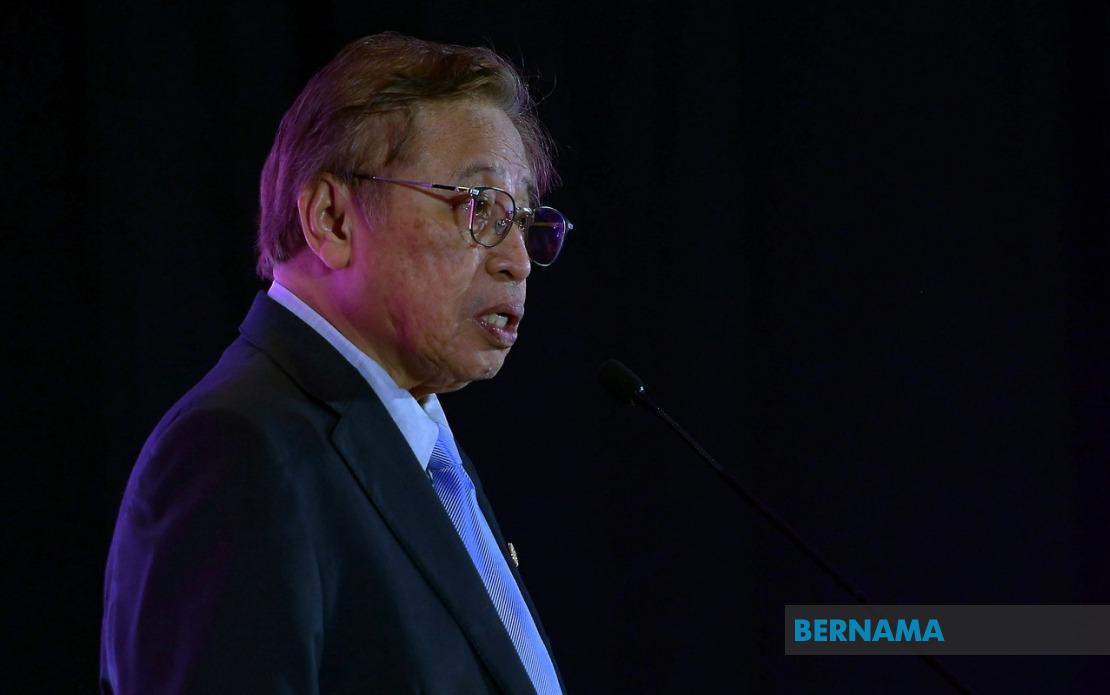
KUCHING, June 9 (Bernama) -- ASEAN needs to have a common platform and framework agreed upon by all member states to realise the implementation of the ASEAN Power Grid, said Sarawak Premier Tan Sri Abang Johari Tun Openg.
He said that at present ASEAN still does not have a concrete implementation framework, especially regarding cross-border interconnection.
“ASEAN does want to establish what is called the ASEAN Grid, but from the discussions I see that there is no concrete framework and consensus on the issue of interconnection.
“There is indeed a proposal from Laos to Singapore and also from us to Indonesia, the Philippines and directly to Singapore on how to implement interconnection and a framework that is acceptable to all,” he told reporters after attending the Asia Pacific Green Hydrogen Conference and Exhibition here today.
Abang Johari said that therefore, currently Sarawak is taking an early approach, through bilateral cooperation with several neighbouring countries in preparation for regional energy integration.
He said, Sarawak currently supplies energy to West Kalimantan, Indonesia and has equity involvement in East Kalimantan through Sarawak Energy Berhad (SEB), apart from expanding supply to Sabah which has the potential to be connected to the Philippines in the future.
“At the same time, discussions are also underway to supply energy to Brunei while electricity exports to Singapore are currently awaiting a decision regarding the cable route.
“This relationship is a bilateral agreement between countries, but in the future it will be part of a regional grid network,” he said.
Abang Johari also suggested that ASEAN should examine the model adopted by the European Union in managing and coordinating the regional energy system.
“We don’t need to recreate it, let’s look at how the European Union manages their energy and we adapt it according to ASEAN,” he said.
He added that Sarawak remained committed to the target of producing 10 gigawatts (GW) of energy by 2030, with current domestic consumption estimated at around six to seven GW, thus creating surplus capacity for export purposes.
— BERNAMA